
Running a Sex Offender Check in Placer County
The California Megan's Law Website is the official public channel for Placer County registry records. California DOJ manages it from data in the California Sex Offender Registry. Registration begins at a local law enforcement office, not on the public website. The local agency sends the information to DOJ, which says it updates the public website daily from those agency reports. Searchers should therefore treat the state site as the public display and the registering agency as the source of a recent address or status update.
Begin with a full name when one is known. A place search by city, ZIP code, county, address, or map can add local context. Match the photograph, aliases, physical details, and qualifying offense before drawing a conclusion. Posting rules differ by registrant, so a Placer County result may show a full home address, a location at ZIP-code level, or no public entry at all.
Placer County Registry Posting Categories
California does not publish every registered person in the same way. The DOJ summary of California registration laws describes home-address, ZIP Code, conditional home-address, and non-disclosure categories. The source page shown below is useful because it joins registration duties with the public posting rules that shape a Placer County search.
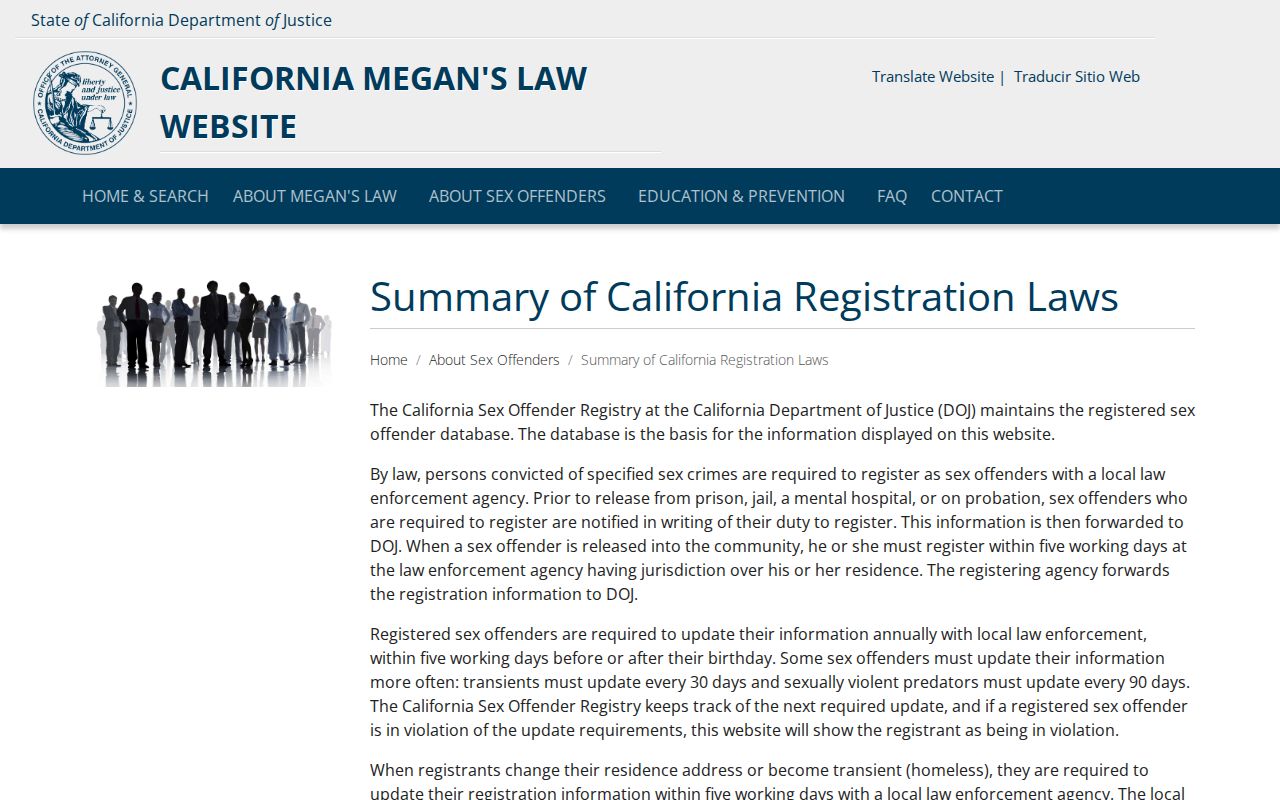
A ZIP Code category can display the city, county, and ZIP without a street address. Some people remain required to register locally but cannot be displayed publicly. Certain qualifying registrants may also seek exclusion under Penal Code 290.46(d). A blank map area is therefore not a complete count of all people with registration duties in Placer County.
Searching the California Megan's Law Website
The state site requires acceptance of its disclaimer before the search tools open. The official Megan's Law summary explains that the public display draws from California's Sex and Arson Registry. The source image below helps distinguish the official data source from unofficial directories.
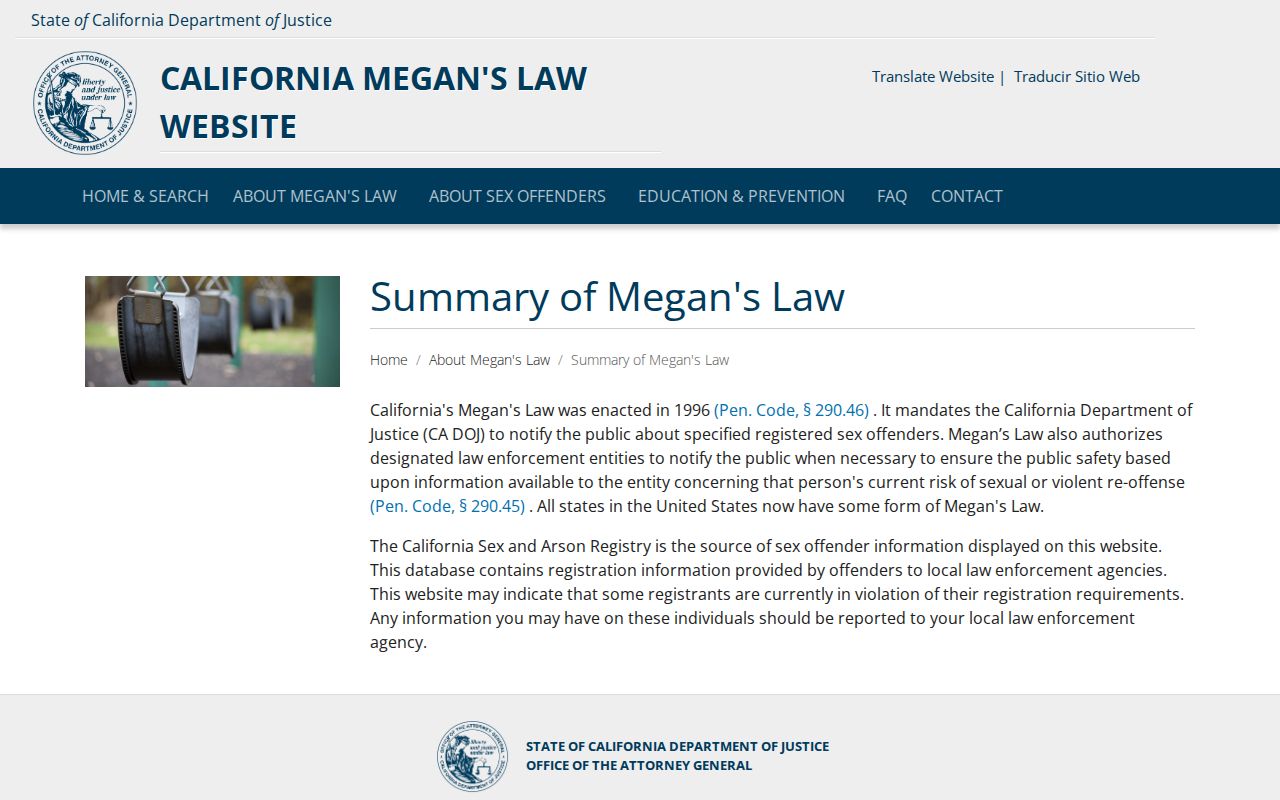
Use more than one search path when the spelling, address, or city boundary is uncertain. Results should be checked against the profile rather than judged from a map marker alone.
- Open the official registry and accept its conditions of use.
- Search by name, or use the address, map, city, ZIP, or county controls.
- Compare the result list with known identity and location details.
- Open the profile and read the offense, address category, and registration status.
| Field Label | Type | Required | Notes |
|---|---|---|---|
| Disclaimer acceptance | Required gate | Yes | Must be accepted before using search functions. |
| Name | Text | No | Use known identity details to narrow results. |
| Address or map | Text and map | No | Supports place-based searching and map display. |
| City, ZIP, or county | Location filter | No | Useful for Placer County and its incorporated cities. |
| Map or list | Display control | No | Review profile details after selecting a result. |
Placer Searches Across State Lines
A California-only query may be too narrow when a person recently lived elsewhere or when the known location crosses a state line. The Dru Sjodin National Sex Offender Public Website searches participating federal, state, territorial, and tribal registry systems through one national entry point.
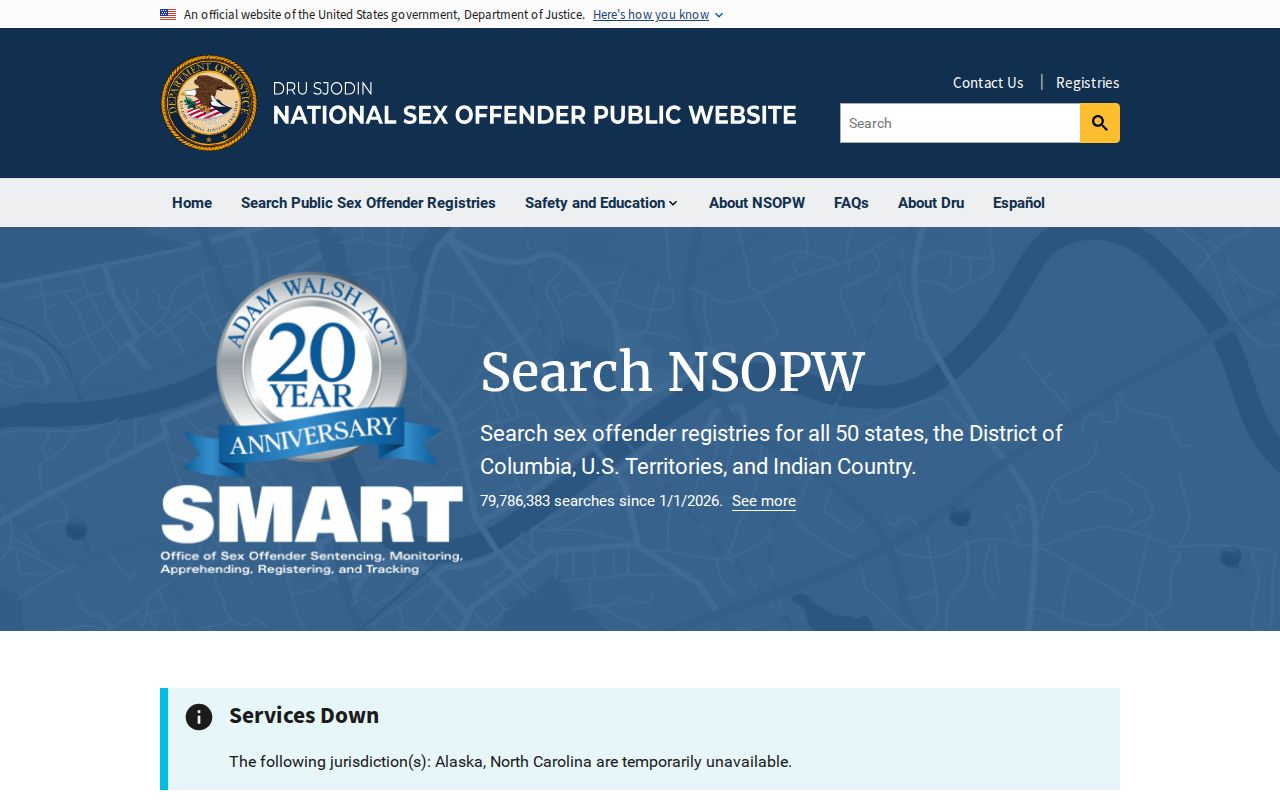
NSOPW is a cross-state layer, not a replacement for California Megan's Law. Return to the California profile for its posting category and state-specific details. Differences can reflect the source registry's rules, update timing, or the search criteria used.
What a Placer Registry Profile Shows
A public profile is an identity and registration summary, not a forecast of future conduct. California DOJ descriptions support the fields below, although the amount of address detail depends on the posting category. Risk-related material may appear through SARATSO or Static-99R context, but a score is not the same thing as a local posting category and cannot guarantee an individual's conduct.
| Name & Aliases | Posted identity names used to distinguish records. |
|---|---|
| Photo & Description | A posted photograph, sex, physical description, and reported scars, marks, or tattoos. |
| Location | A home address, conditional address, or city, county, and ZIP information, based on posting category. |
| Registerable Offense | The offense or offenses that created the registration duty. |
| Risk Context | Risk-related information may be supplied through state assessment material where available. |
| Registration Status | A status or violation indicator may identify an out-of-compliance record. |
Placer County Sheriff Registration
People who register through the Placer County Sheriff's Office use the Public and Records Unit at 2929 Richardson Drive in Auburn. The unit lists registration for drug, sex, gang, and arson offenses among its duties. Its phone is 530-889-7812, and posted hours are Monday through Friday, 8 a.m. to 5 p.m., excluding county holidays. Most services require an appointment, so the office directs visitors to call first.
Local registration information moves from the registering law enforcement agency to California DOJ. DOJ then updates the public Megan's Law display daily based on local reports. That flow explains why a newly reported move may not appear at exactly the same moment at the counter and online.
Registration Requirements and Levels in California
California Penal Code section 290 sets the registration framework. The official statute is the primary source for the duties and tier system shown below.
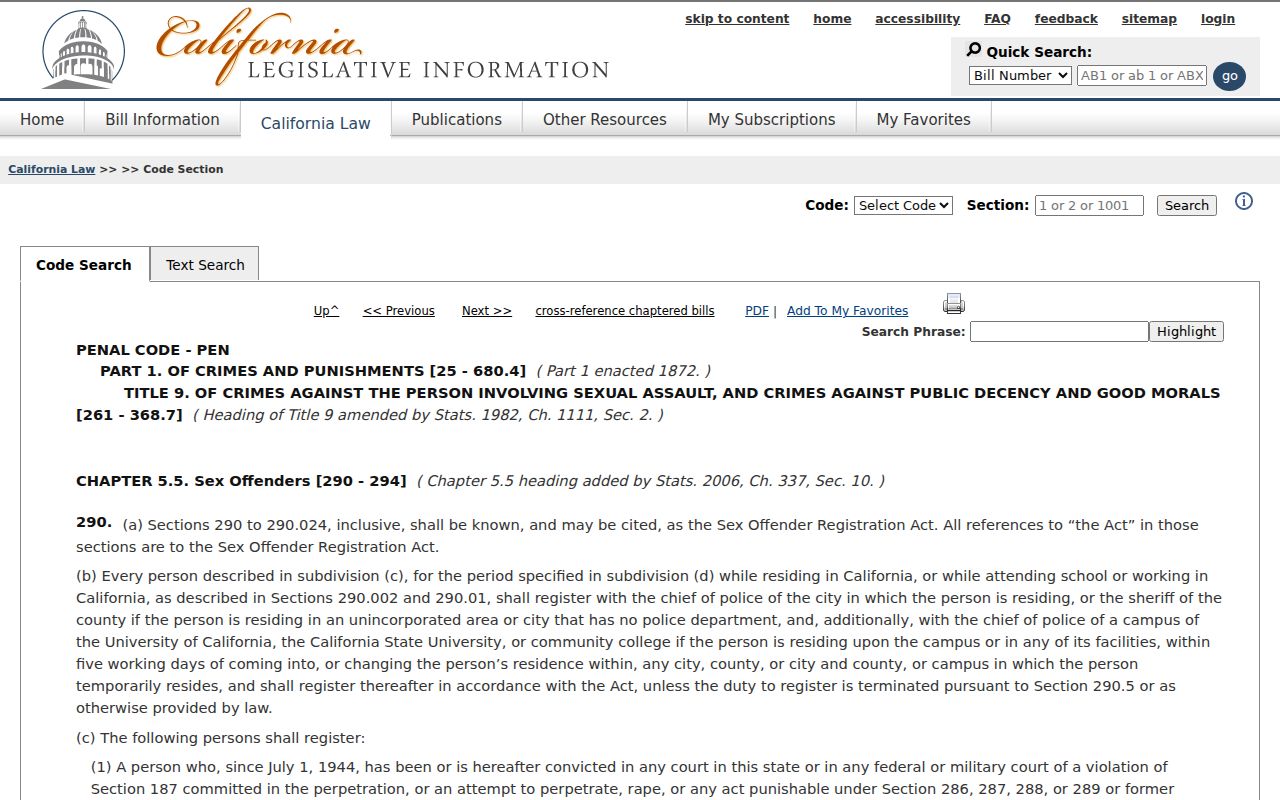
Adult tiers set minimum registration periods. Separate update schedules apply to annual registration, moves, transient status, and sexually violent predator status. Eligibility to end a duty is not established merely because the minimum period has passed.
| Level / Tier | Duration | Verification Frequency |
|---|---|---|
| Tier 1 adult | Generally a 10-year minimum | Annual update near birthday; changes as required |
| Tier 2 adult | Generally a 20-year minimum | Annual update near birthday; changes as required |
| Tier 3 adult | Generally lifetime | Annual update near birthday; changes as required |
| Juvenile tiers | Commonly 5 or 10 years | Requirements depend on juvenile tier |
Placer Registration Update Deadlines
Most registrants must complete an annual update within five working days before or after their birthday. A move or change to transient status also triggers an update within five working days with local law enforcement. Transient registrants report every 30 days, while sexually violent predators update every 90 days. These cycles explain why a profile can contain a status warning even when the person appears at a known location.
Readers should not infer compliance from a date alone. The registering agency and DOJ administer the record, and the public profile supplies only the fields authorized for display.
Why Placer Results May Be Missing
A person can have a California registration duty without appearing in a public name or map result. Penal Code 290.46 creates non-public categories, and some qualifying people may seek exclusion from the website. Location detail can also be limited to ZIP, city, and county. Search spelling, an alias, a recent move, or the handoff from a local agency to DOJ may affect what a user sees.
The DOJ posting summary should be consulted before treating an empty result as proof. A public website result answers what California may display, not whether every local registration file is absent.
Lawful Use of Placer Registry Data
California permits registry information to be used only to protect a person at risk. Personal and family safety planning, careful community awareness, and confirming a relevant identity fit that purpose. The California DOJ misuse page sets out the limits and penalties.
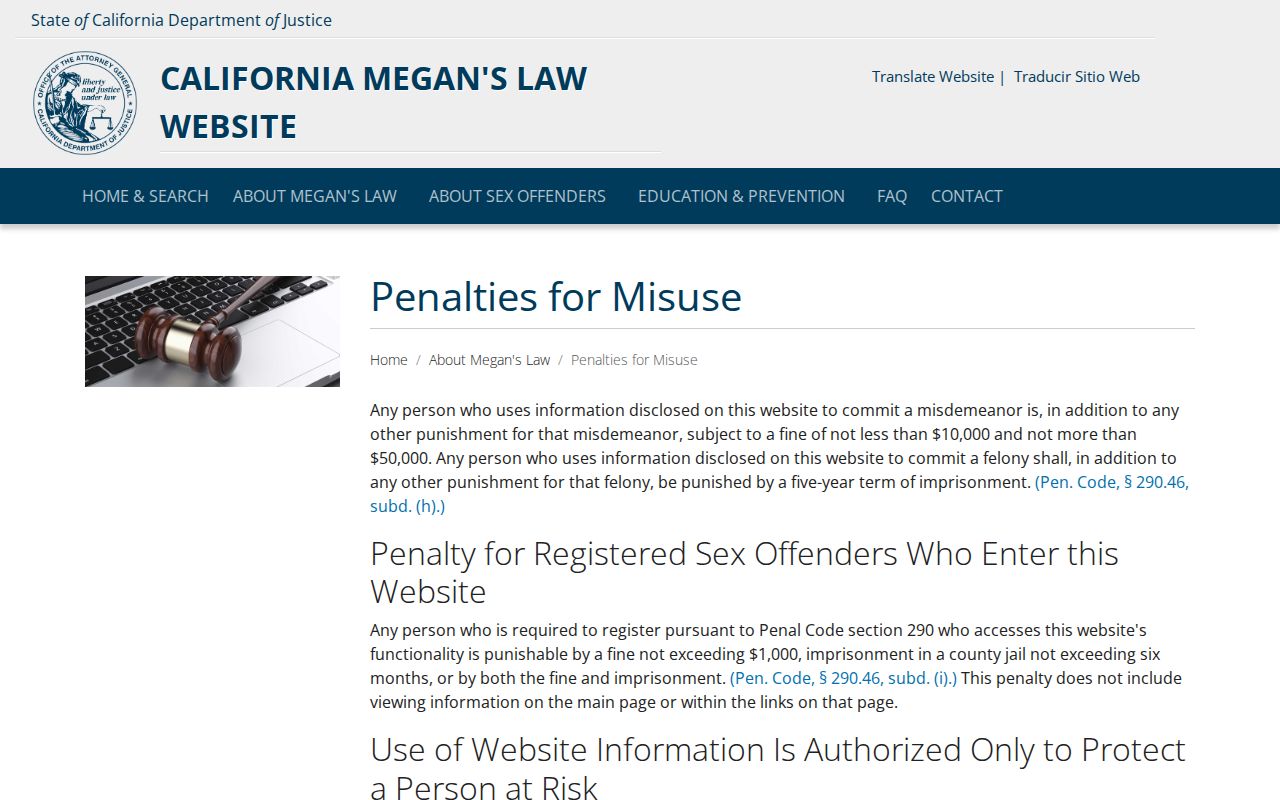
The restriction reaches far beyond harassment. DOJ lists prohibited decisions involving credit, loans, insurance, jobs, education benefits, housing, and business services. Unauthorized use can bring civil liability and added criminal penalties.
The controlling public-disclosure rule is Penal Code section 290.46. Its official text is shown in the source image below.
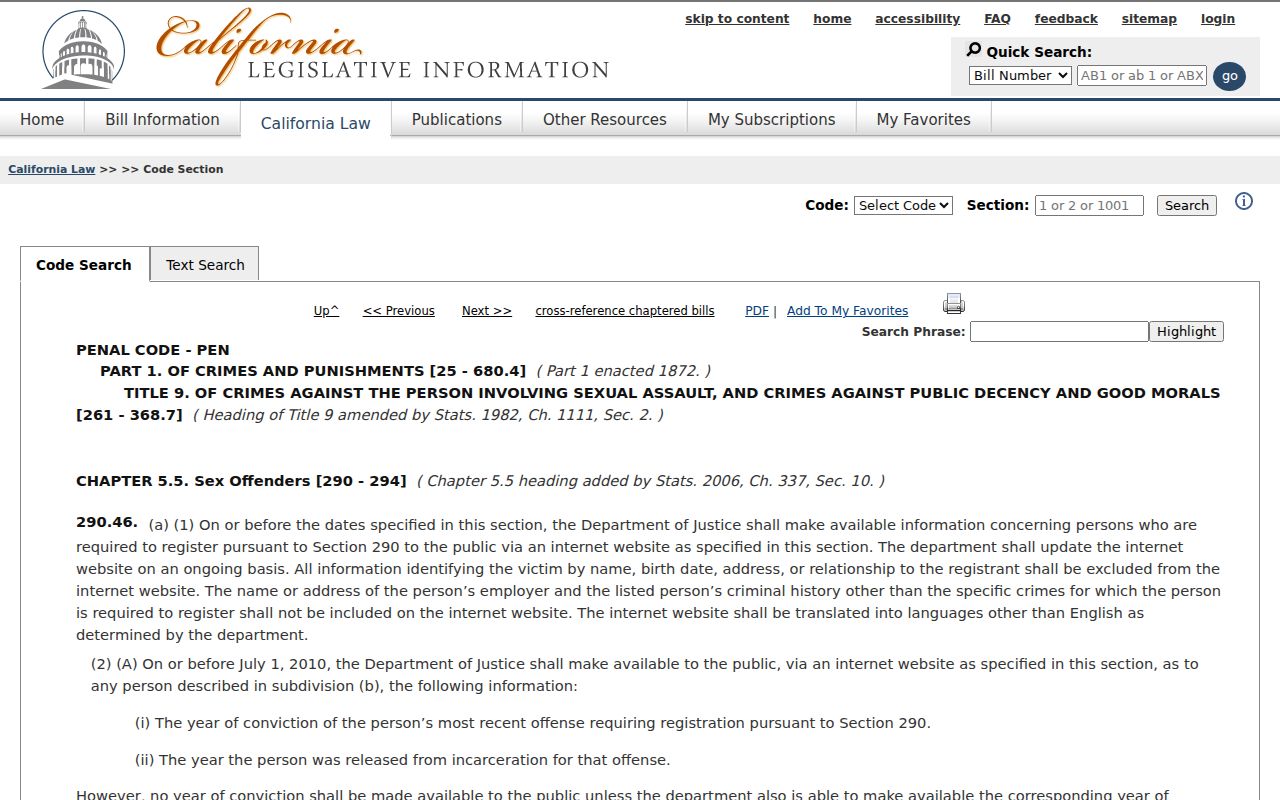
Misuse connected to a misdemeanor can add a fine from $10,000 to $50,000. Misuse connected to a felony can add five years in prison. Civil damages, attorney fees, exemplary damages, or civil penalties may also apply.
Misuse is unlawful: Penal Code 290.46 limits registry information to protecting a person at risk. Harassment, threats, vigilantism, discrimination, or other prohibited use can lead to criminal and civil penalties.